
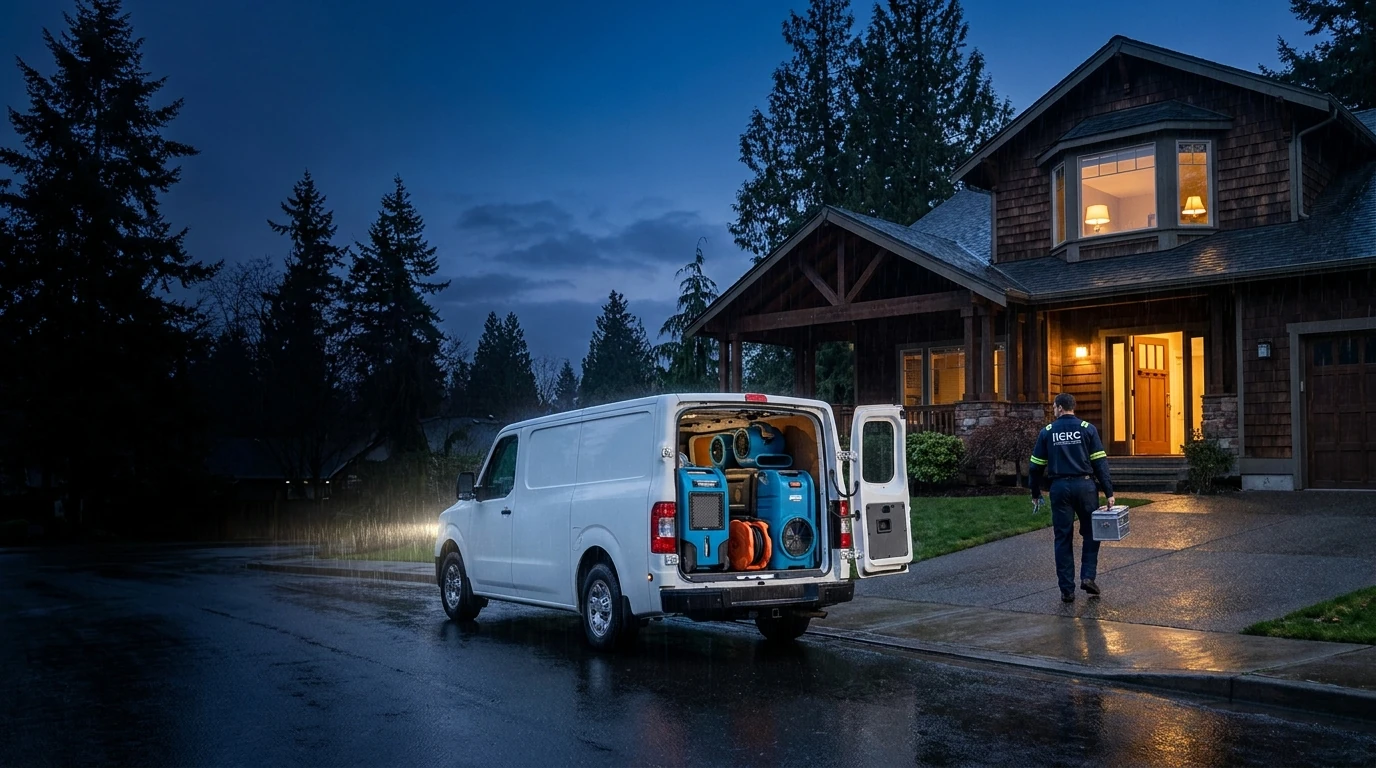
The honest answer to choosing a restoration company is this: the one who shows up first isn’t always the one you should hire. After a pipe bursts or a fire chars your kitchen, the pressure to act immediately is real — but signing a contract with the first crew that knocks on your door can cost you thousands in inflated bills, shoddy repairs, or a claim your insurer refuses to pay. Here’s how to slow down just enough to make a smart call.
Why the Hiring Decision Feels So Hard (And Why That’s by Design)
Restoration emergencies happen at 2 a.m. on a Sunday. Your basement has four inches of standing water. The smell of smoke is still in your hair. You’re not in a position to comparison-shop, and some contractors know it.
A practice called “storm chasing” is common in the industry: crews follow emergency dispatch scanners or insurance claim databases and show up uninvited at damaged properties within hours of an event. They’re not always bad actors — some do solid work — but the urgency they create is manufactured. You almost never have to sign anything on the spot.
Federal Way and the broader South King County area see this pattern after every major wind event, heavy rain season, or the occasional house fire that draws neighborhood attention. The Pierce County line and proximity to Puget Sound means moisture intrusion is a year-round issue here, not just a winter problem, and there’s no shortage of companies willing to capitalize on that.
Knowing this doesn’t mean you should wait. It means you should know what to look for before the emergency happens — or at least before you sign.
What to Look for in a Restoration Company
Not all restoration contractors are the same, and the differences matter more than the marketing.
Verify certifications before credentials impress you. The Institute of Inspection, Cleaning and Restoration Certification (IICRC) sets the industry standard for water damage, fire and smoke restoration, and mold remediation. Ask specifically which technicians on the crew are IICRC-certified — not just the company in general. A certified project manager overseeing uncertified laborers is common and worth knowing about.
Check their license with the Washington State Department of Labor & Industries. Contractor licensing in Washington is public record. A legitimate restoration company will have a current L&I license and general liability insurance. Ask for the certificate of insurance directly — not a screenshot, the actual document with a policy number you can verify.
Ask how they handle insurance billing. A reputable company will work directly with your adjuster and document everything using Xactimate, the software most insurers use to price claims. If a contractor says they’ll “handle the insurance so you don’t have to worry” without explaining the process, that’s worth probing. You are still a party to your own claim.
Look at response time honestly. For active water damage, every hour matters. Mold can begin colonizing porous materials — drywall, insulation, wood framing — within 24 to 48 hours of saturation. A company that can’t get a crew on-site within a few hours for an emergency water call is less useful than one that can, regardless of how good their reviews are.
Read reviews for specifics, not stars. A 4.8-star average tells you almost nothing. Look for reviews that mention the adjuster relationship, whether the scope of work matched the final bill, and how the company communicated during the project. One detailed negative review about billing disputes is more informative than twenty five-star reviews that say “great job.”
Red Flags That Should Make You Walk Away
Some warning signs are subtle. Others are not.
- They ask you to sign an Assignment of Benefits (AOB) immediately. An AOB transfers your insurance claim rights to the contractor. It’s not always predatory, but signing one before you understand the scope of damage removes your leverage in a dispute.
- The estimate arrives with no line items. Legitimate restoration estimates are detailed — equipment type and quantity, labor hours, materials, disposal fees. A lump-sum quote for a complex water or fire job is a sign the contractor either doesn’t know what they’re doing or doesn’t want you to know what you’re paying for.
- They discourage you from calling your insurer first. Your insurer has a right to inspect the damage before significant work begins (with exceptions for emergency mitigation). A contractor who tells you to hold off on that call is usually protecting their own pricing flexibility.
- No written scope of work before demo begins. Tearing out wet drywall or fire-damaged materials before documenting the damage thoroughly can actually hurt your claim. Reputable companies photograph and document everything before a single panel comes off the wall.
- Pressure to decide within the hour. Legitimate emergencies require fast action on mitigation — extracting water, boarding up openings, stopping active damage. They don’t require you to commit to a full reconstruction contract in the driveway.
When to Call a Professional Immediately (And When You Have a Little Time)
Not every situation is a drop-everything emergency, but some are.
Call immediately if:
- There’s standing water near any electrical panel, outlet, or appliance
- The water source is a sewage backup (Category 3 water carries serious health risks)
- You see active structural damage — sagging ceilings, buckled floors, compromised load-bearing walls
- Fire or smoke damage has affected HVAC systems (smoke travels through ductwork fast)
- You smell a musty, earthy odor in a space that recently flooded — that’s mold, and it’s already growing
You have a short window (hours, not days) if:
- A clean water pipe leak was caught quickly and the affected area is limited
- Smoke damage is surface-level and the structure appears intact
- You’ve identified a moisture stain but no active leak
For water damage specifically, the 24–48 hour window before mold colonization is real but not instant. If you can get the area dried and dehumidified quickly, you may prevent secondary damage. But “quickly” means industrial air movers and dehumidifiers, not household fans — the equipment matters.
National Restoration Construction handles water damage, fire and smoke restoration, and mold remediation across Federal Way and South King County, and can typically have a crew on-site within hours of an emergency call at (206) 883-0333.
How to Protect Yourself During the Process
Once you’ve chosen a company and work has begun, the job isn’t to step back and trust — it’s to stay informed.
Keep a written log of every conversation with the contractor and your adjuster: date, time, who you spoke with, what was said. Take your own photos before, during, and after every phase of work. Ask for moisture readings in writing — a legitimate water damage company will use a moisture meter and should be able to show you the numbers that justify how long drying equipment stays in place.
If the scope of work changes — and in restoration, it often does, because damage behind walls is rarely visible upfront — get a written change order before the work proceeds. This protects you and the contractor.
Finally, don’t release the final payment until you have documentation that the work passed any required inspections and that moisture readings are back to normal dry levels. In Washington, you have rights under the Consumer Protection Act if a contractor’s work is deceptive or materially deficient.
If you’re in the middle of a situation right now — water on the floor, smoke smell that won’t leave, a stain on the ceiling you can’t explain — the best next step is a call to a licensed, IICRC-certified restoration company that will document before they demo. National Restoration Construction serves Federal Way and the surrounding South King County area and is reachable at (206) 883-0333. If you’re still in research mode, bookmark this page — the checklist above applies to any company you’re evaluating, including this one.