
If a pipe just burst in your home, here’s the short version: shut off the main water supply, cut power to any affected rooms at the breaker, and start documenting everything with your phone camera before you touch a thing. Those three steps protect you, your home, and your insurance claim. The rest of this checklist walks you through what to do in order — from the first five minutes through the weeks of drying and repair that follow.
The First Five Minutes: Stop the Water and the Danger
A burst pipe can push 100 gallons or more into your home before you even find the shutoff. Every second of flow means deeper saturation into subfloor, insulation, and wall cavities — materials that can begin supporting mold growth within 24 to 48 hours.
Do these steps in order:
- Locate and close your main water shutoff valve. In most Federal Way homes, it’s in the garage, crawl space, or near the water meter at the street. Turn it clockwise until it stops. If you’ve never tested yours, now is a very bad time to discover it’s seized — call the city’s water utility emergency line to shut it at the meter.
- Turn off electricity to affected rooms at the breaker panel. Water and live circuits are a lethal combination. If the panel itself is in a flooded area, don’t touch it — call an electrician or the fire department.
- Open a cold-water faucet on the lowest floor. This drains pressure from the lines and slows any residual flow from the burst section.
- Photograph and video everything before moving anything. Walk the perimeter of the damage. Open cabinet doors under sinks. Capture standing water depth, waterlines on walls, and the location of the break. Your insurance adjuster will ask for this.
- Move valuables, documents, and electronics to dry ground — but only if you can do so without wading through standing water near outlets or appliances.
If the burst happened inside a wall or ceiling and you’re not sure where the water is coming from, look for bulging drywall, a soft spot underfoot, or a dark stain spreading across the ceiling. Those are your clues to where the water is pooling before it finds a way out.
What NOT to Do After a Pipe Bursts
Some of the most expensive mistakes in water damage happen in the first hour, usually because a homeowner was trying to help.
- Don’t use a wet/dry shop vac as your primary extraction tool on deep standing water. It’s fine for small puddles, but it won’t pull moisture from inside walls, under hardwood, or through carpet padding. Surface-dry floors that are still saturated underneath are the leading cause of hidden mold problems.
- Don’t turn the heat up to “dry things out faster.” Warm, humid air accelerates mold colonization. Controlled drying with professional dehumidifiers and air movers is a different process than just raising the thermostat.
- Don’t throw away damaged materials before your adjuster sees them. Soggy drywall, warped flooring, ruined insulation — these are line items in your claim. Document first, remove second.
- Don’t assume the damage is only where you can see it. Water follows gravity and the path of least resistance. A burst pipe on the second floor can saturate the subfloor, travel along joists, and show up as a stain in a first-floor ceiling 15 feet away from the actual break.
- Don’t wait to act because you’re not sure if it’s covered. Water damage claims are time-sensitive. Most policies require you to take “reasonable steps to mitigate further damage” — meaning if you do nothing for three days and mold sets in, the insurer may deny the mold portion of the claim.
When to Call a Water Damage Professional (and What They’ll Actually Do)
You can handle the immediate steps above on your own. But there’s a clear line where DIY stops making sense.
Call a restoration professional if any of the following are true:
- There’s more than a few inches of standing water, or water has covered more than one room
- The water reached carpet, hardwood, engineered flooring, or any area with a subfloor
- The burst happened near or inside a wall or ceiling cavity
- The water sat for more than an hour before you found it
- You smell anything musty or sewage-like (which could indicate the break involved a drain line, not just supply)
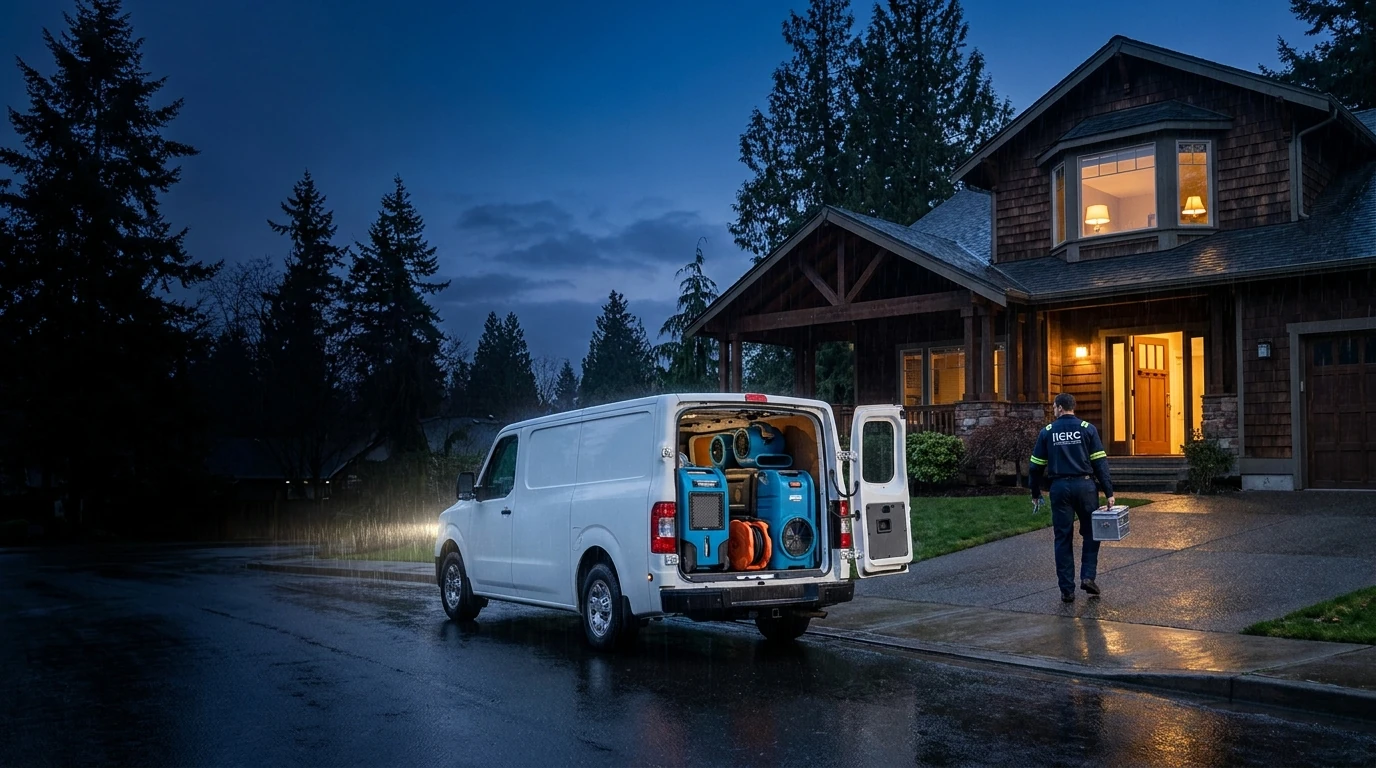
A certified water damage restoration crew — look for IICRC Water Restoration Technician (WRT) certification — arrives with truck-mounted extractors that pull water from deep within flooring assemblies, thermal imaging cameras to find moisture hidden inside walls, and calibrated drying equipment that’s logged daily to meet insurance documentation standards.
The process typically looks like this: extraction first, then placement of industrial air movers and dehumidifiers, then daily moisture readings until the structure reaches target drywall moisture content (usually below 16% for wood-framed walls in the Pacific Northwest’s humid climate). That drying phase commonly takes three to five days. Only after confirmed drying does reconstruction begin — replacing drywall, flooring, insulation, and trim.
National Restoration Construction handles both the water damage restoration and the rebuild, which matters because coordinating two separate contractors (a mitigation company and a general contractor) is one of the most common sources of delays and billing disputes in insurance claims. If you’re dealing with the aftermath of an appliance leak — a washing machine supply hose, a refrigerator ice maker line — the same process applies, and that work falls under appliance leak cleanup as a distinct claim category with some insurers.
The Recovery Timeline: What to Expect Over the Next Few Weeks
Once the emergency is stabilized, here’s a realistic picture of what comes next:
- Days 1–3: Active drying. Equipment runs 24 hours. Expect noise and elevated indoor temperatures. A technician checks moisture readings daily.
- Days 3–5: Drying confirmation and equipment removal. If readings are within range, the mitigation phase closes out with a drying report — a document your insurance company needs.
- Week 1–2: Scope of reconstruction is finalized. This is when you’ll find out whether the subfloor needs replacement, whether any structural members were affected, and what the full repair estimate looks like.
- Weeks 2–6: Reconstruction. Drywall, insulation, flooring, paint, and trim are replaced. Timeline varies significantly based on material availability and permit requirements (some structural repairs in King County require a permit).
- Throughout: Keep every receipt, every communication with your insurer, and every moisture log. These protect you if there’s a dispute about the scope or cause of damage.
Getting Back to Normal
A burst pipe is one of the more disruptive things that can happen to a home, but it’s also one of the most recoverable — when the response is fast and thorough. The checklist above gives you control over the first critical hour. After that, the smartest move is usually getting a professional assessment, even if you’re not sure yet whether you’ll file a claim.
If you’re in the Federal Way area and dealing with active water damage right now, National Restoration Construction is available around the clock. Call (206) 883-0333 for an immediate response — a technician can typically be on-site within 60–90 minutes to assess the damage and start the drying process before conditions get worse.