
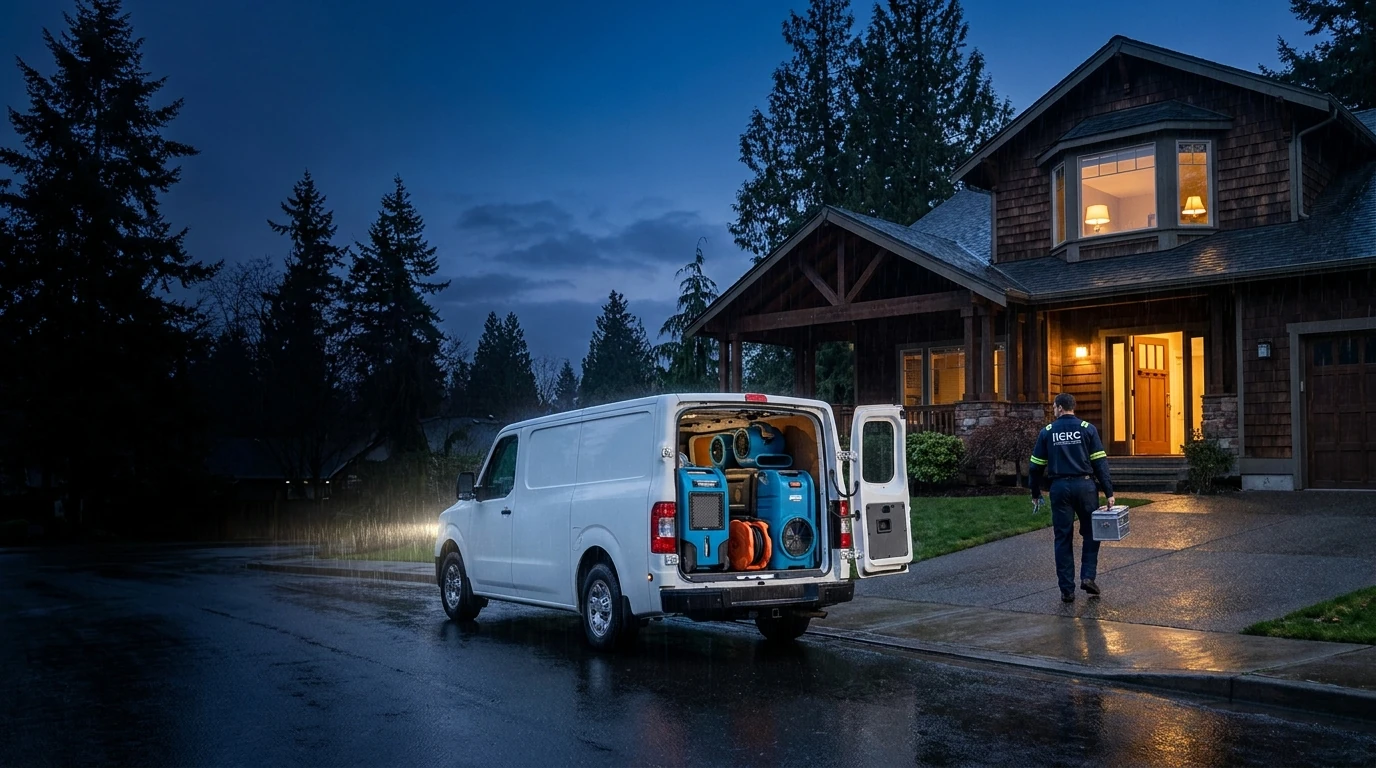
If you’re staring at a soaked subfloor or a ceiling that just gave way, the first question is always the same: will insurance pay for this? The short answer is that most standard homeowners policies (HO-3 and HO-5 forms) cover sudden, accidental water damage from internal sources — a burst pipe, a failed water heater, an overflowing washing machine. What they almost universally exclude is gradual damage, maintenance failures, and water that originates outside the home. The distinction matters enormously, and adjusters are trained to look for it.
The Core Coverage Rule: Sudden and Accidental vs. Gradual
Insurance carriers apply one central test when evaluating a water damage claim: was the damage sudden and accidental, or was it gradual and foreseeable? A pipe that freezes and splits during a cold snap is sudden. A supply line under the kitchen sink that has been seeping for six months is gradual — and most policies will deny that claim, or at minimum reduce the payout, on the grounds that a reasonable homeowner would have discovered and repaired it.
The IICRC S500 standard, which governs professional water damage restoration, classifies water by category. Category 1 (clean water from a supply line or appliance) is the most straightforward for claims. Category 2 (gray water from dishwasher overflows or washing machine discharge) is usually still covered if the event was sudden. Category 3 (black water — sewage backups, floodwater) is where coverage gets complicated fast. Sewage backup coverage is typically a separate endorsement, not part of the base policy.
If you’re unsure whether your event qualifies as sudden, pull your policy’s “perils insured against” section. HO-3 policies cover dwellings on an open-perils basis (everything is covered unless specifically excluded), but personal property on a named-perils basis. HO-5 policies cover both on open-perils terms. The exclusion language to look for is usually phrased as “continuous or repeated seepage or leakage” — that’s the phrase adjusters cite when denying gradual damage claims.
What’s Typically Covered
Standard homeowners policies generally cover water damage from the following sources when the event is sudden and accidental:
- Burst or frozen pipes: A pipe that splits due to freezing temperatures or pressure failure. Most policies cover the resulting water damage to the structure and contents, though the pipe itself may not be covered under the dwelling section.
- Appliance failures: Washing machine hose blowouts, dishwasher supply line failures, refrigerator ice-maker line breaks. These are among the most common residential water damage claims.
- Water heater failures: A tank that ruptures or overflows suddenly. Note that some policies exclude the appliance itself while covering the resulting damage to floors, walls, and contents.
- Accidental overflow: A bathtub left running, a toilet that overflows due to a blockage. Coverage typically applies to the resulting structural damage.
- Roof leaks from a covered peril: If a windstorm or hail damages the roof and rain enters through that breach, the water damage is usually covered as part of the wind/hail claim. Rain entering through an existing maintenance failure (a roof that was already deteriorating) is typically excluded.
- HVAC condensate line failures: Less commonly known, but a backed-up condensate drain that causes ceiling or wall damage is often covered as a sudden accidental discharge.
What’s Typically Excluded
The exclusions are where most claim disputes happen. Knowing them in advance helps you document correctly and, in some cases, make repairs that preserve coverage eligibility.
Flooding: This is the most significant exclusion. Standard homeowners policies do not cover flooding from external sources — rising water from a river, storm surge, or heavy rain runoff entering through the foundation or ground-level openings. Flood coverage requires a separate policy through the National Flood Insurance Program (NFIP) or a private flood carrier. If you’re in a FEMA-designated flood zone, your lender likely requires it. If you’re not, it’s still worth considering — roughly 20 percent of NFIP claims come from properties outside high-risk zones.
Gradual leaks and seepage: A slow drip behind a wall that eventually causes mold or rot. The policy language “continuous or repeated seepage” is the standard exclusion. If an adjuster finds evidence that the leak was ongoing (staining patterns, dried mineral deposits, established mold growth), expect a denial or a reduced payout.
Sewer and drain backup: Water that backs up through a floor drain, toilet, or sink due to a sewer line blockage is typically excluded from base coverage. Many carriers offer a sewer backup endorsement for $50-$150 per year — it’s worth adding if your home has older drain lines or is in an area with aging municipal infrastructure.
Foundation water intrusion: Groundwater seeping through foundation cracks or a basement floor is almost universally excluded. This is considered a maintenance and waterproofing issue, not a sudden accidental event.
Neglect and maintenance failures: If an adjuster determines that the damage resulted from a condition you knew about or should have known about — a roof that was visibly failing, a supply line that showed corrosion, a sump pump you hadn’t tested — the claim is vulnerable to denial or reduction.
How to Document a Water Damage Claim Correctly
Documentation quality directly affects claim outcomes. Adjusters work from evidence, and the more organized yours is, the less room there is for dispute.
Before any cleanup, photograph everything. Wide shots of the affected rooms, close-ups of the failure point (the burst pipe, the failed hose, the overflow source), and systematic photos of every affected surface. If you have a smartphone, the metadata timestamps on photos can support the “sudden” argument — they show when you discovered the damage.
Identify and photograph the source. The adjuster needs to see what failed. A burst supply line, a cracked pipe fitting, a ruptured water heater — document it before any repairs are made. If a plumber needs to make an emergency repair before the adjuster arrives, photograph the failed component before it’s removed.
Request a written scope from your restoration contractor. A professional water damage assessment using a moisture meter (calibrated to ASTM standards) and thermal imaging will document the full extent of saturation — often well beyond what’s visible. This written scope becomes part of the claim file and protects you if the adjuster’s initial estimate is lower than the actual damage.
Track all expenses. Emergency service calls, temporary lodging if the home is uninhabitable, contents moved to storage — all of these may be reimbursable under the Additional Living Expenses (ALE) section of your policy, typically up to 20-30 percent of the dwelling coverage limit.
Know your deductible before you file. The average water damage insurance claim runs between $11,000 and $15,000 for a mid-sized residential loss, according to industry loss data. If your deductible is $5,000 and the damage is $6,500, the math on filing changes — a claim on record can affect your renewal premium for three to five years.
Should You File the Claim?
Not every covered loss is worth filing. The calculus involves your deductible, the estimated repair cost, and your claims history. Two or three water damage claims within a five-year period can make you a higher-risk policyholder at renewal — some carriers will non-renew after multiple claims, and others will raise premiums significantly.
For losses clearly above your deductible with unambiguous sudden-and-accidental cause, filing is usually the right call. For borderline losses close to the deductible, get a written estimate from a licensed restoration contractor first. That estimate gives you the information to decide without committing to a claim.
One practical step that costs nothing: call your agent (not the claims line) and describe the scenario hypothetically before filing. Ask how it would likely be categorized and whether it would affect your renewal. Agents can often tell you whether a loss fits the covered-peril criteria without opening a formal claim.
What Happens After You File
Once a claim is open, the carrier assigns an adjuster who will inspect the property, review documentation, and issue a scope of loss and estimate. In Washington State, carriers are required to acknowledge a claim within 10 business days and provide a coverage decision within 15 business days of receiving all required documentation.
If the adjuster’s estimate is lower than your contractor’s written scope, you have options. Most policies include an appraisal clause — a formal dispute mechanism where each party selects a competent appraiser and an umpire resolves disagreements. You can also request a re-inspection with your contractor present to walk through line items.
A professional water damage assessment from a certified restoration contractor, completed before the adjuster’s visit, puts you in a much stronger position. The scope documents moisture readings, affected materials, and the drying protocol required — all of which support the claim and reduce the chance of scope disputes later.
National Restoration Construction provides written water damage assessments and works directly with insurance carriers throughout the claims process. If you need a documented scope or want help understanding what your loss covers, request a water damage assessment before your adjuster visit.