
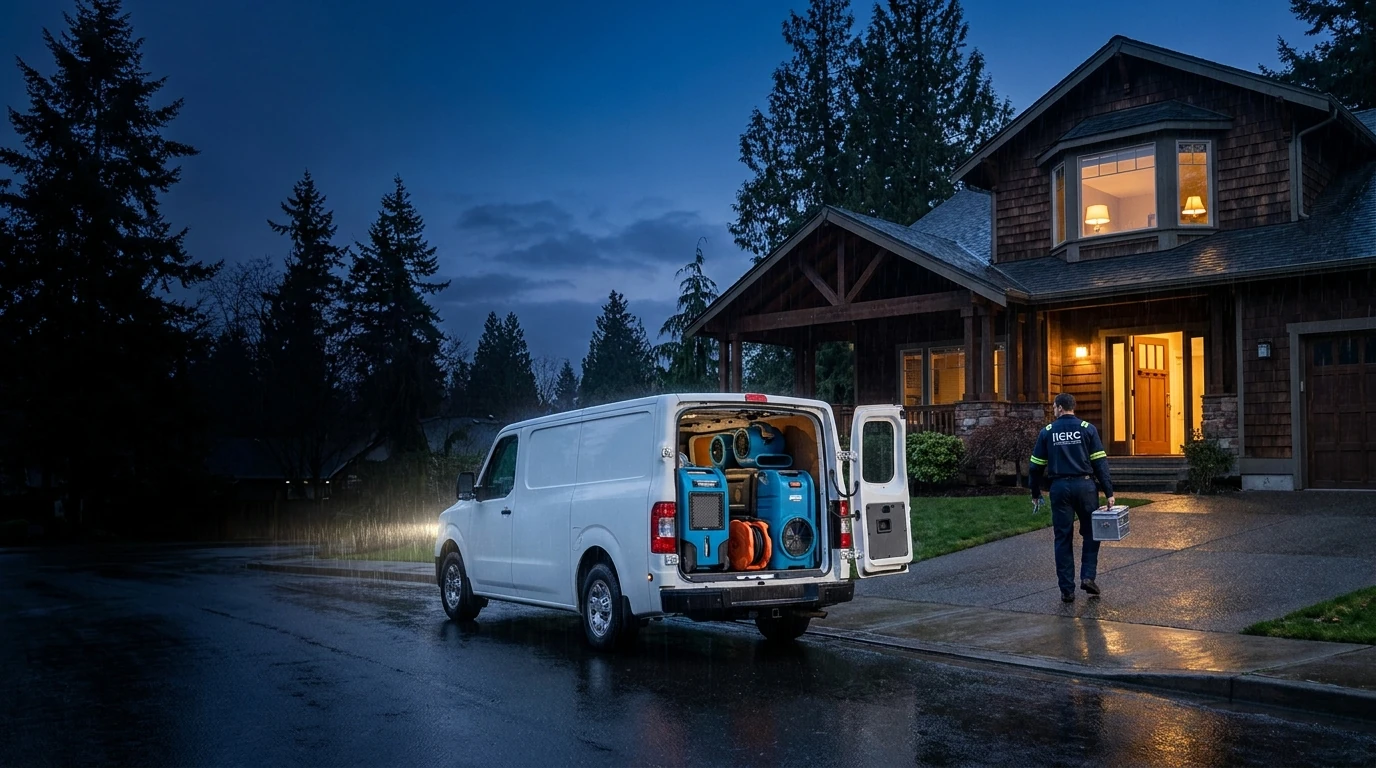
Fire damage restoration follows a predictable sequence — even when the fire itself felt anything but. Whether you’re dealing with a small kitchen fire or a blaze that spread through multiple rooms, the process moves through six core phases: emergency securing, damage assessment, water and debris removal, smoke and soot cleaning, structural drying and deodorization, and finally reconstruction. Knowing what happens at each stage helps you ask the right questions, understand your insurance adjuster’s timeline, and avoid the common mistakes that turn a recoverable situation into a much larger one.
Phase 1: Emergency Stabilization (Hours 0–24)
The first thing a restoration crew does after a fire is assess whether the structure is safe to enter. That’s not a formality — fires weaken load-bearing walls, warp floor joists, and can compromise a roof in ways that aren’t obvious from the outside. If firefighters used significant water, you may also have active structural saturation on top of the fire damage.
Once the site is cleared, the priority is securing the building envelope:
- Board up windows and doors that were broken or burned through. This keeps weather out and deters theft — a real concern when a property is visibly damaged and unoccupied.
- Tarp the roof over any areas where sheathing or shingles burned away. Even a Pacific Northwest drizzle can soak insulation and framing within hours, compounding the damage.
- Shut off utilities if they haven’t been already. Gas and electricity should stay off until a licensed inspector clears them.
- Document everything before touching it. Your insurance claim depends on a clear photographic record of the pre-remediation condition.
If your fire happened in Federal Way or anywhere in King or Pierce County, the local fire marshal may place a placard on the structure indicating whether it’s safe to re-enter. Follow that guidance — it’s not bureaucratic caution, it’s based on what the crew saw inside.
Phase 2: Damage Assessment and Insurance Documentation
A thorough assessment is what separates a well-managed restoration from one that drags on for months. A qualified restoration contractor — ideally one that’s IICRC-certified in fire and smoke restoration — will walk the entire structure and categorize damage into three types:
- Primary fire damage: materials that were directly burned or charred
- Secondary smoke and soot damage: surfaces that weren’t touched by flame but are coated in residue, which can extend far from the fire’s origin
- Water damage: from suppression efforts, which can affect areas that never saw smoke
Smoke travels further than most people expect. In a house fire that starts in the garage, soot can infiltrate HVAC ductwork and deposit on walls two floors away. That’s not hypothetical — it’s a common finding on assessments, and it matters because untreated smoke residue continues to corrode metal surfaces and degrade fabrics for months after the fire.
This assessment phase is also when your restoration contractor should be communicating directly with your insurance adjuster. Most reputable contractors handle insurance billing directly and can provide the line-item documentation adjusters require.
Phase 3: Debris Removal and Structural Cleaning
Anything that’s burned beyond recovery comes out first — charred drywall, melted insulation, compromised framing. This isn’t just aesthetic cleanup; burned organic material off-gasses continuously and is a primary source of that persistent smoke smell that can linger for years in an improperly remediated home.
Once the debris is cleared, the structural cleaning begins. This is more technical than it sounds:
- Dry soot (from fast, hot fires) is typically brushed and vacuumed before wet cleaning, because wetting it first can drive it deeper into porous surfaces.
- Wet soot (from slow, smoldering fires — common with upholstered furniture or synthetic materials) requires chemical sponges and alkaline cleaners to lift the oily residue.
- Protein residue from kitchen fires is nearly invisible but produces an intense, rancid odor. It bonds tightly to surfaces and requires enzymatic cleaners to break down.
Concrete, brick, and unfinished wood are particularly absorbent. Masonry in a Federal Way home that’s seen decades of Pacific Northwest moisture tends to be more porous than masonry in drier climates, which means soot penetrates deeper and requires more aggressive treatment.
Phase 4: Deodorization and Air Quality Treatment
This is the phase most homeowners underestimate — and the one that most often gets cut short when people try to manage restoration themselves.
Smoke odor isn’t just a surface problem. The volatile organic compounds (VOCs) that cause that acrid smell have penetrated wall cavities, subfloor assemblies, and HVAC systems. Spraying air freshener or painting over soot-stained walls doesn’t eliminate the odor source; it temporarily masks it, and the smell returns — especially in warm weather when materials off-gas more aggressively.
Professional deodorization typically involves a combination of:
- Thermal fogging — a deodorizing solvent is vaporized and dispersed through the structure, penetrating the same pathways smoke traveled
- Ozone treatment — ozone generators oxidize odor molecules at a molecular level; this requires the structure to be unoccupied during treatment
- HEPA air scrubbing — continuous filtration to capture fine particulates that remain airborne long after visible smoke clears
- Duct cleaning — if the HVAC system ran during or after the fire, the ductwork is almost certainly contaminated and needs to be addressed before the system is used again
Phase 5: Structural Drying
If firefighters used hose lines inside the structure, you’re dealing with a combined fire and water damage event. Water moves fast — it can travel through wall cavities and saturate subfloor assemblies within minutes. Mold colonization can begin in as little as 24–48 hours in wet materials, so drying isn’t something that can wait until after reconstruction planning.
Industrial dehumidifiers and air movers run continuously — often for 3–5 days, sometimes longer depending on the extent of saturation and the ambient humidity. In the Seattle metro area, where outdoor relative humidity regularly runs above 70%, mechanical drying is essential; opening windows is not a substitute.
Moisture readings are taken daily using thermal imaging and pin-type meters to verify that structural materials are reaching acceptable dryness levels before reconstruction begins.
Phase 6: Reconstruction
Once the structure is clean, dry, and deodorized, rebuilding can begin. Depending on the extent of damage, this can range from repainting and replacing drywall in a single room to full structural reconstruction involving framing, roofing, electrical, and mechanical systems.
A contractor who handles both the remediation and the reconstruction — sometimes called a “full-service” or “design-build” restoration firm — can simplify the process considerably. You’re working with one point of contact, one insurance file, and one project timeline rather than coordinating between a remediation company and a separate general contractor.
Timelines vary widely. A contained kitchen fire with no structural damage might be resolved in two to three weeks. A fire that spread through multiple rooms and required significant structural work can take three to six months, particularly when permit timelines are involved.
If you’re in the early stages of dealing with fire damage — or even just trying to understand what your insurance company is telling you — the most useful thing you can do right now is get a professional assessment before making any decisions about what to keep, what to discard, or what repairs to authorize. National Restoration Construction handles fire and smoke damage restoration throughout Federal Way and the surrounding King and Pierce County area. Call (206) 883-0333 any time — the line is answered around the clock.