
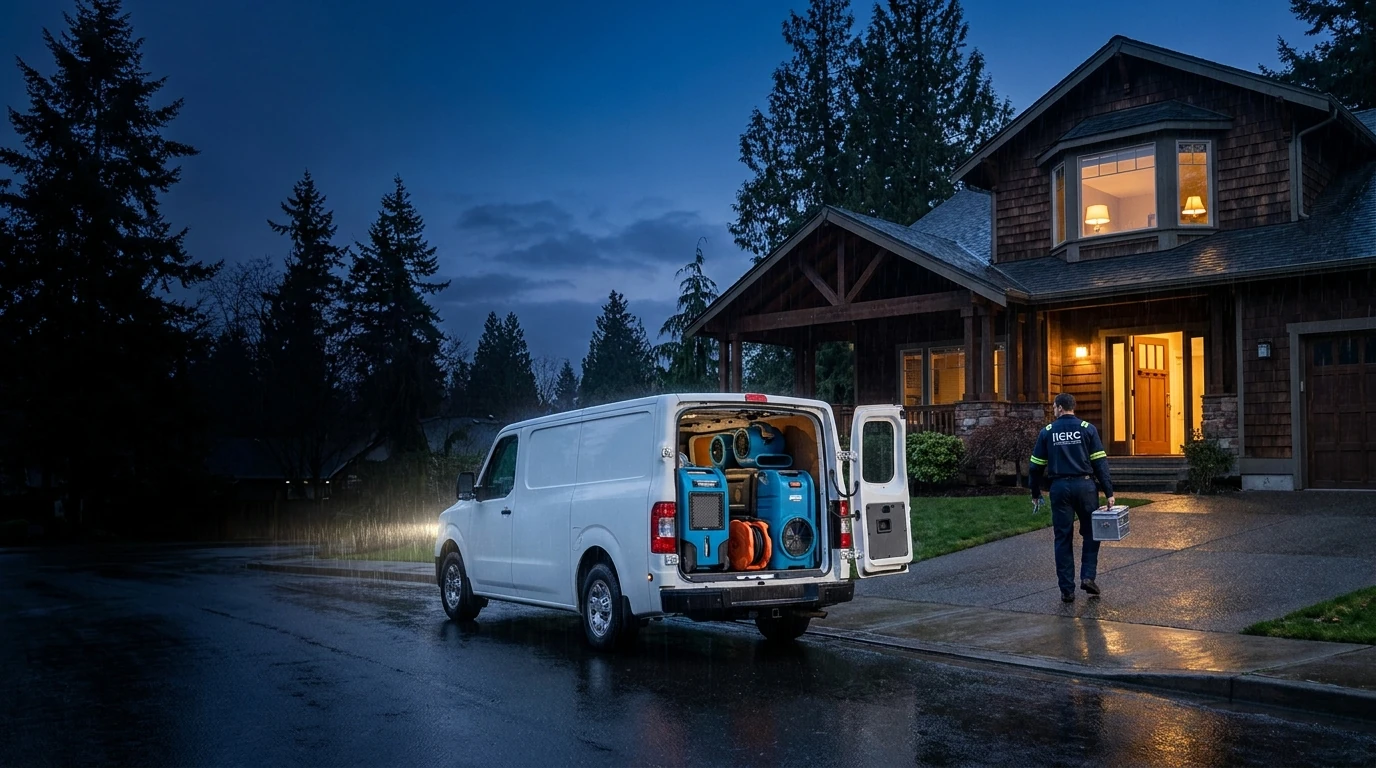
Sewage backup is one of the few home emergencies where the instinct to handle it yourself can land you in the hospital. Raw sewage — whether it’s backing up through a floor drain, a toilet, or a basement utility sink — contains a cocktail of bacteria, viruses, and parasites that don’t wash off your skin the way mud does. Before you grab a mop and a bottle of bleach, here’s what you’re actually dealing with, why standard cleaning products fall short, and what the cleanup process genuinely requires to be safe.
What’s Actually in Sewage (It’s Worse Than You Think)
Sewage is classified as Category 3 water by the IICRC — the most hazardous category in water damage restoration. Unlike a burst supply line (clean water) or an overflowed dishwasher (gray water), sewage is called “black water” for a reason: it contains waste from every drain in the building, plus anything the municipal sewer system has collected.
A partial list of what’s swimming in it:
- Bacteria: E. coli, Salmonella, Leptospira (the bacterium behind leptospirosis, which can cause liver and kidney failure)
- Viruses: Hepatitis A, norovirus, rotavirus
- Parasites: Cryptosporidium and Giardia, both of which survive in water and are resistant to standard chlorine concentrations
- Fungi: Sewage environments are warm, wet, and nutrient-rich — mold can begin colonizing porous materials within 24 to 48 hours of exposure
- Hydrogen sulfide gas: That rotten-egg smell isn’t just unpleasant. At high concentrations in a poorly ventilated basement, it can cause dizziness, loss of consciousness, and respiratory damage
Exposure doesn’t require drinking the water. Splashing a contaminated surface, touching your face after handling wet materials, or breathing aerosolized droplets while scrubbing can all cause infection.
Why Bleach Isn’t Enough
This is the part most DIY guides skip. Bleach is a surface disinfectant. It works when you apply it to a hard, non-porous surface — tile, sealed concrete, stainless steel — let it dwell, and then rinse. What it cannot do:
- Penetrate porous materials. Drywall, subflooring, wood framing, carpet padding, and insulation absorb sewage. Once contamination is inside the material, bleach applied to the surface doesn’t reach it. The material has to come out.
- Kill pathogens in standing water. Diluted bleach in a flooded basement loses its disinfecting power quickly, especially in the presence of organic matter (which sewage is full of).
- Address the moisture underneath. Even if you sanitize the visible surface, any moisture trapped under flooring or inside wall cavities will feed mold growth within days. In Federal Way’s mild, damp climate, that window is short.
Professional sewage cleanup uses EPA-registered hospital-grade disinfectants, applied after physical removal of contaminated materials, followed by HEPA air scrubbing and moisture readings with calibrated meters — not a visual check.
The Real Risks of DIY Cleanup
Infection
The most immediate danger. Cuts or abrasions on your hands are direct entry points for bacteria. Leptospirosis, in particular, is a serious concern in the Pacific Northwest — it’s carried by rodents common in older neighborhoods, and their waste often enters the sewer system. Symptoms can take two to 30 days to appear, which means you might not connect the illness to the cleanup.
Secondary contamination
Carrying contaminated materials through the house — walking wet shoes across clean carpet, using the same bucket in multiple rooms, running an HVAC system that pulls air through a contaminated space — spreads pathogens to areas that weren’t originally affected. Remediation professionals establish containment barriers before work begins, specifically to prevent this.
Incomplete drying and hidden mold
Sewage backup almost always saturates materials below the visible waterline. Subfloor panels, the bottom plates of walls, and concrete block foundations wick moisture upward. If that moisture isn’t measured and dried to industry standards (below 16% moisture content in wood, typically), mold colonies establish themselves inside the wall or floor assembly. By the time you smell it, the remediation scope has grown significantly.
Insurance complications
Most homeowner policies that cover sewage backup require the damage to be documented and remediated by a licensed contractor. If you clean up first and then file a claim, the adjuster has no way to verify the original extent of damage. Some claims get denied or reduced as a result. Taking photos before touching anything, and calling your insurer before cleanup begins, protects your claim.
What to Do Immediately (Before Anyone Arrives)
These steps are safe for a homeowner to take and help limit the damage:
- Stop the source if you can. If the backup is coming from a specific fixture, stop using all drains in the house. Don’t flush toilets or run water — it adds volume to a system that’s already overwhelmed.
- Turn off the HVAC system. Forced air will circulate contaminated air and accelerate mold growth. Turn it off at the thermostat and leave it off until a professional clears it.
- Ventilate carefully. Open windows in the affected area if weather permits, but don’t use fans that blow air toward unaffected parts of the house.
- Keep people and pets out. Children and immunocompromised individuals are especially vulnerable. Restrict access to the affected area.
- Document everything with photos and video. Walk the perimeter of the affected area, capture the water level, affected materials, and any visible damage to belongings. Do this before moving anything.
- Call your insurance company. Report the loss before cleanup begins. Ask whether your policy includes sewage backup coverage (it’s often a separate rider, not included in standard policies).
Do not attempt to vacuum standing sewage with a shop vac, run a sump pump without protective gear, or remove flooring yourself — all of these actions aerosolize contaminated water.
What Professional Sewage Cleanup Actually Looks Like
A licensed remediation crew — IICRC-certified technicians working under containment protocols — follows a defined process:
- Containment setup: Plastic sheeting and negative air pressure machines isolate the work area so contaminated air doesn’t migrate.
- Extraction: Truck-mounted or portable extractors remove standing water. This is not a shop vac.
- Material removal: Contaminated porous materials (drywall, insulation, carpet, pad, affected subflooring) are bagged, sealed, and disposed of according to local regulations. In King County, sewage-contaminated materials have specific disposal requirements.
- Cleaning and disinfection: All remaining hard surfaces are cleaned of organic matter first, then treated with EPA-registered disinfectants at appropriate dwell times.
- Drying: Commercial dehumidifiers and air movers run for a minimum of 3 days (often longer), with daily moisture readings to confirm the structure is drying to target levels.
- Clearance testing: In some cases, post-remediation testing confirms pathogen levels are within acceptable limits before reconstruction begins.
Only after clearance is it safe to rebuild — new drywall, new flooring, new insulation.
When to Call a Professional
The honest answer: for any sewage backup that has affected more than a small, hard-surface area (like a single tile floor with no wall contact), call a professional. The threshold for Category 3 water is lower than most people expect. If sewage has touched drywall, wood framing, carpet, or insulation — even briefly — those materials need to come out.
If you’re in Federal Way or the surrounding South King County area and you’re looking at standing sewage right now, National Restoration Construction handles sewage cleanup 24 hours a day. Call (206) 883-0333 — the team can walk you through the immediate steps over the phone and get a crew to your property. The sooner extraction begins, the smaller the remediation scope tends to be.